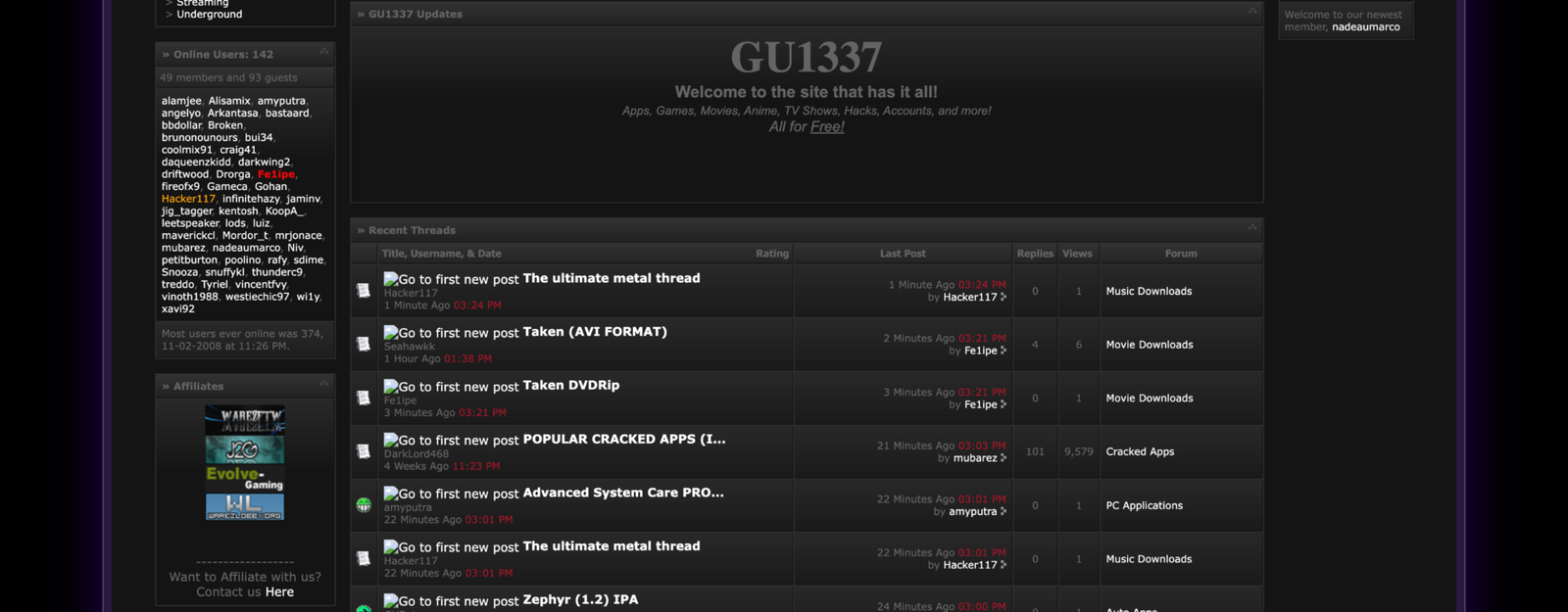
Summer 2006. I was in middle school, halfway between homework and an obsession with video games. I wanted to learn to code so I could build my own game — but the fastest way to practice was to build things that people would actually use. So I made a website.
What followed was not a plan. It was a sprint fueled by curiosity, clan friendships, late nights, and the kind of naïve stubbornness only a teenager has. The site was GU1337. It started as a tiny forum for my gaming buddies and, before I knew what “scale” even meant, it became a global platform with millions of visitors. I sold it, rebuilt it after getting hacked, and exited without ever getting sued. More importantly, the whole run taught me lessons I still use today.
Here’s the story — and the things I’d tell my younger self if I could.

The origin — learning by doing (and breaking things)
I wanted to make games, so I learned to code by making websites. GU1337 began on free hosts with a handful of friends, clan members turned early users. For my birthday I convinced my parents to let me use their card for three things: a domain, a year of paid hosting, and a license for vBulletin — about $360 total. That purchase changed everything.
I made some classmates moderators. I taught myself forum admin, basic PHP tweaks, and how to keep a community engaged. I did all of this after school, between chores, homework, and actual gaming. It was a crash course in product, people, and ops — but still a hobby at heart.
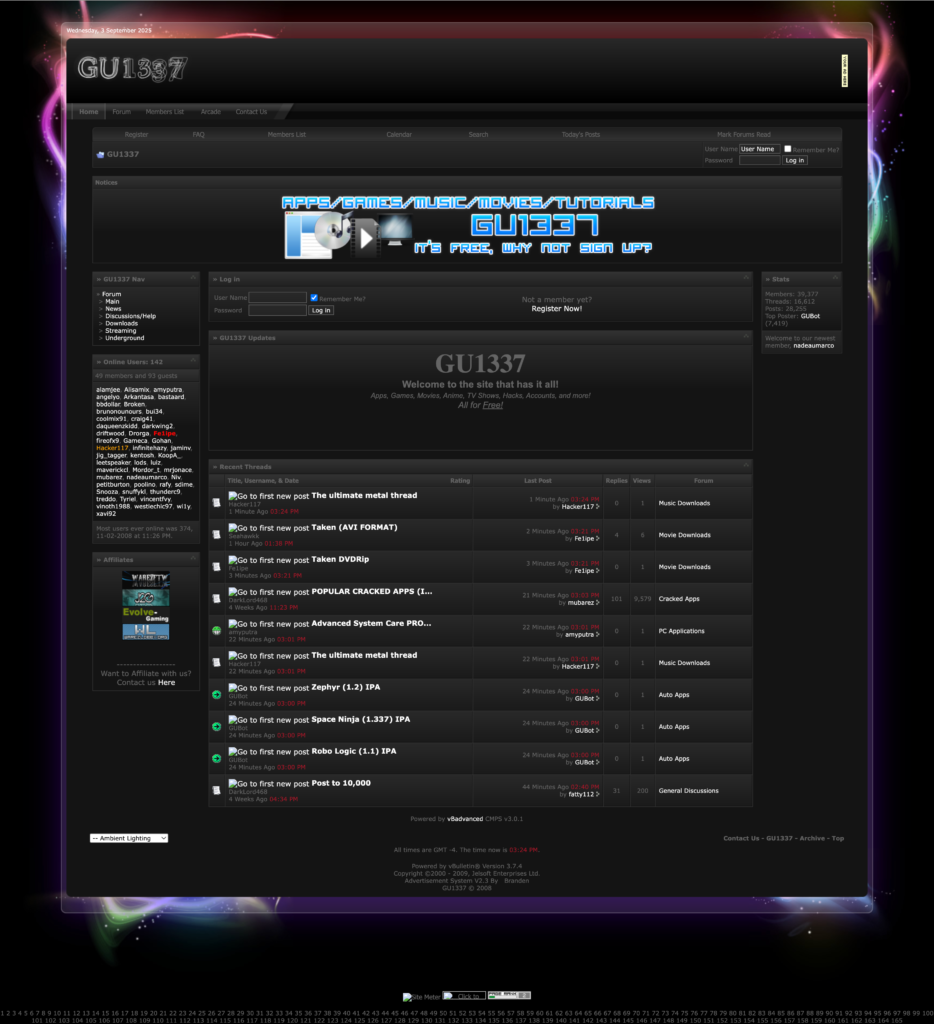
From forum to file-sharing hub (and how growth sneaks up on you)
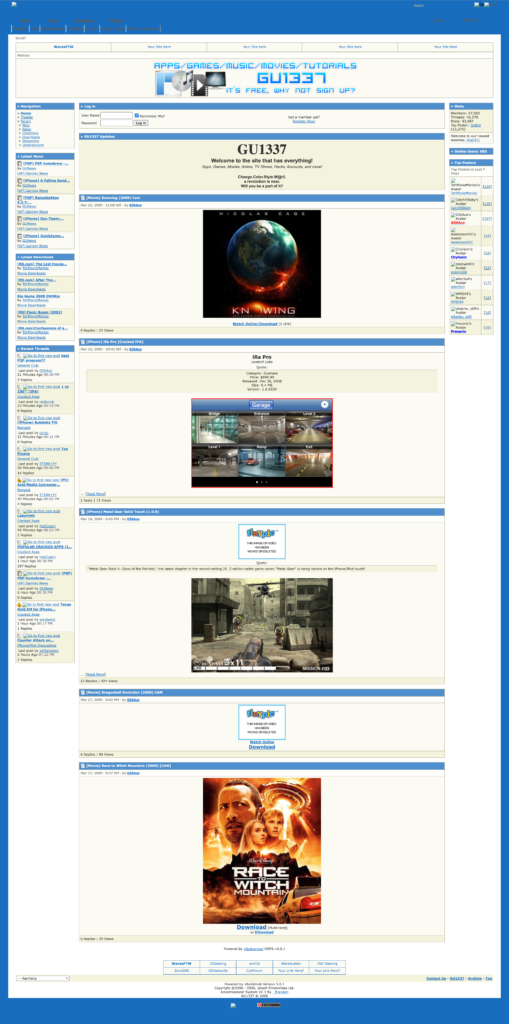
User requests drove the site’s evolution. People wanted to share homebrew PSP games, mods, music, and movies. I was experimenting with PSP homebrew myself, posting small projects I’d made. Word of mouth did the rest.
I dove into SEO because I needed visibility. I learned how on-page structure and community content could rank. Suddenly organic traffic took off. A few weeks of this, and my free host couldn’t keep up. Bandwidth caps hit. I needed money and infrastructure.
I asked the community for donations. We raised enough to upgrade hosting. Traffic continued to climb — tens of thousands a day, then 50k uniques a day; signup spikes of 5,000/day. At peak the site grew to 200k members and ~8 million uniques per month. Alexa dropped into the low thousands (I even saw an Alexa rank under 1,000 at one point). I was a teenager running something the size of a small company.
The wake-up call: takedowns and responsibility
Then the first DMCA notice arrived. My host took the site offline. I had recent backups, so I moved. I researched bigger hosts and eventually migrated internationally. I won’t detail the tactics — the point is: rapid growth brought real legal and ethical exposure that I hadn’t prepared for.
Each takedown forced a decision: fight, comply, or move. I generally removed the offending links when flagged, but the pattern was clear — scale brings scrutiny. That was a pivotal moment: this wasn’t a playground anymore. It affected creators, rights-holders, and other businesses. That realization changed how I operated.
Monetization: from donations to real revenue
I experimented. Ads were a dead end — Google booted us and alternatives paid poorly. So I built creative affiliate promotions and an internal feature to surface affiliate offers between posts. That system lifted cash flow dramatically: from a few hundred a month to roughly $5k/month. That money paid for better servers, backups, and paid moderators. Monetization turned a hobby into something sustainable — but it also attracted more attention.
The hack, the speedrun rebuild, and the lesson in backups
At one point the site was hacked. My email had been compromised, and the site and domain were lost. I didn’t have a clean, up-to-the-minute backup. That summer, instead of sulking, I rebuilt — fast.
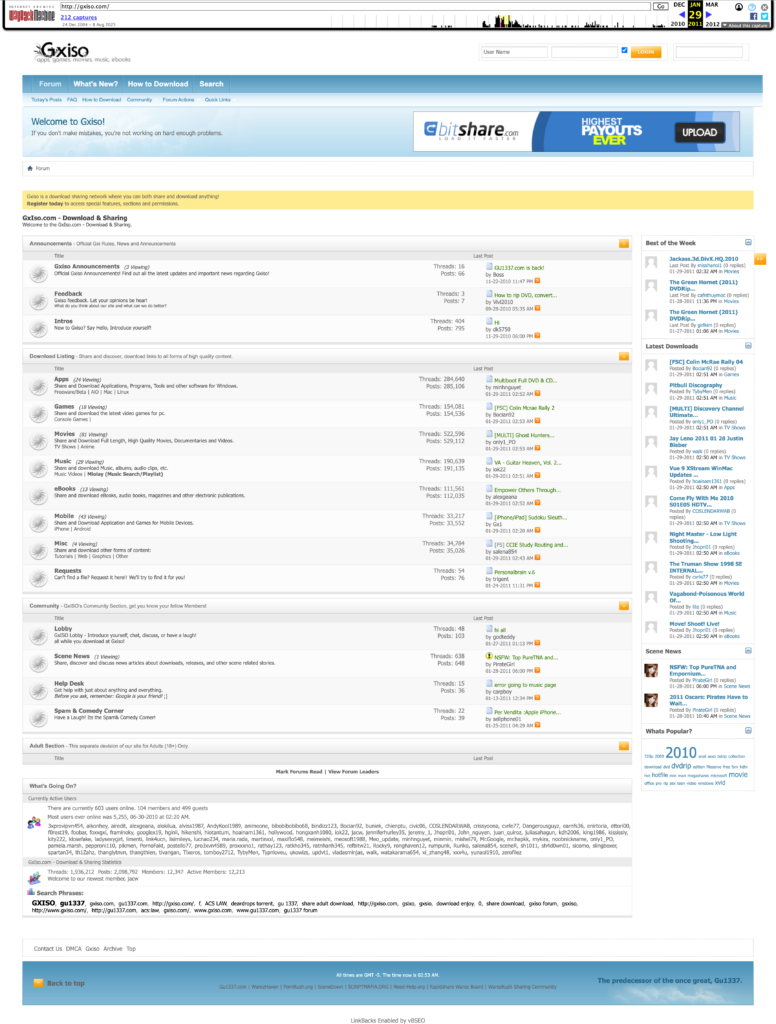
I launched GxISO.com on a new domain, rebuilt systems with better processes, and automated content discovery (I wrote scripts to aggregate public content). Within weeks we had hundreds of thousands of threads and traffic that climbed back to — and beyond — prior levels. Alexa kept falling: 100k → 50k → 10k → 5k → 2k → 987. Suddenly GxISO sat among the top ~1,000 websites worldwide.
That episode taught me two technical lessons I still repeat:
- Backups are non-negotiable and must be tested.
- Operational security for admin accounts — especially emails — is critical.
I won a speedrun of rebuilding not because of trickery, but because I had the experience, the volunteer team, and enough capital to move quickly.
The pivot: industry trends and the exit
High school brought perspective. Netflix and Spotify began changing how people consumed media. Platforms and rights-holders were getting sharper at enforcement. I watched competitors get taken down and realized the long game was shifting.
I decided to exit. I sold the site to a competitor for an undisclosed amount and folded the experience into paid work and learning. I left the industry without legal trouble and with a set of skills I hadn’t expected to gain at 13: web ops, SEO, product growth, monetization, community management, and crisis handling.
And yes — I still hadn’t made that video game I dreamed of.
What running Gu1337 & GxISO taught me (the practical takeaways)
These are the lessons that stuck — practical, ethical, and operational:
1. Build governance early. Communities scale faster than moderation and policy. Build clear rules, escalation paths, and a trusted moderator layer from day one.
2. Plan for legal risk. Takedowns, copyright notices, and compliance are business problems. Factor them into the roadmap; get legal advice when things grow.
3. Monetize responsibly. Sustainable revenue respects creators and users. Short-term tricks attract short-term cash and long-term headaches.
4. Automate the boring stuff — but don’t automate ethics. Automation can scale posting and moderation, but human oversight is necessary for reputation and safety.
5. Backups + security = resilience. Test your backups. Protect admin credentials. Prepare for the inevitable outage or compromise.
6. Community is the moat. People made the site. Treat them well. Invest in trust and transparency.
7. Learn fast, but reflect faster. Trial-and-error is a valid path — but reflect on impact and course-correct when the consequences exceed the gains.
What I’d do differently today
If I could iterate on that teenager’s playbook with an adult brain:
- I’d build licensing and creator-first revenue models from the start.
- I’d integrate a legal & compliance checkpoint before scaling features that touch rights.
- I’d invest earlier in security hygiene and tested disaster-recovery plans.
- I’d keep the core technical and product learnings, but avoid relying on gray-area tactics that invite structural risk.
Why it mattered (and where it put me)
GU1337 was a wild, messy education. I learned product intuition, traffic mechanics, SEO, infrastructure, monetization, and crisis leadership at an age when most kids were learning geometry. Those skills paid off: I left that chapter with real operational experience and the confidence to attack legitimate, sustainable projects.
I also learned humility. The internet gives and takes, and what looks like a clever hack from the outside can have human, legal, and ethical consequences. That realization shaped the way I build things afterward.
The punchline
I started building websites to learn to make a video game. I got sidetracked into community-building, ops, and growth at scale. I ended up selling the site and carrying forward a toolbox of skills I still use: how to make things that people want, how to scale responsibly, and how to exit before the game changes too much.
And yes — I eventually circled back to building games. But that’s another story.
— German Calas
Leave a Reply